Downhome's Grant Loveys recently visited the workshop of a man we've dubbed the "Shoal Harbour inventor." Oliver Vardy spends his days thinking up and constructing new and unique musical instruments. Perhaps the most unique is an invention that Oliver calls the Melody Chord Harp. It is essentially a combination of guitar, harp and lap steel, with elements of each instrument working together in a totally new way. Its five individual sets of guitar strings are each tuned to a particular chord. Parallel to these strings is a single string that can be plucked with the thumb and a metal slide, providing a haunting melodic accompaniment to the strummed chords. It's a strange little machine, but it sounds wonderful.
Watch and listen as Oliver strums a tune.
For the full story on the Shoal Harbour inventor, see the May 2013 issue of Downhome.
Big waves, whales, icebergs, seabirds, moose – you get the picture. In the May 2013 issue, we explore some of the very best places to spot icons of Newfoundland and Labrador. Below is awesome video footage of some of our iconic treasures.
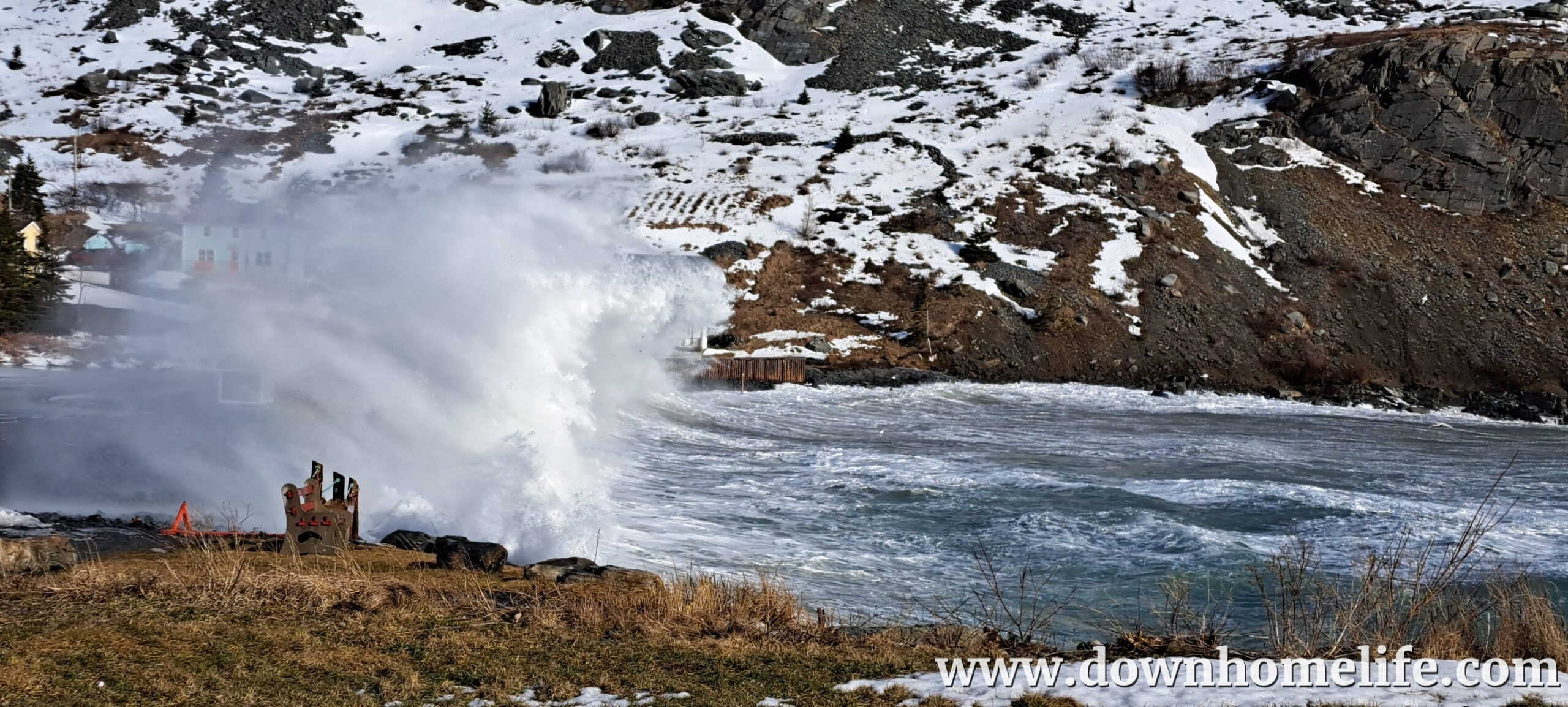
BIG Waves
On windy days, the shores of Middle Cove Beach on the Avalon Peninsula are lined with folks eager to see amazing wave action. But in 2010, some wave watchers got a rude awakening from Mother Nature when a rogue wave washed ashore on Middle Cove Beach. Check out this YouTube video of local news coverage of the phenomenon.
Whales
While the waters of Witless Bay, as well as Twillingate and Southern Labrador, provide almost guaranteed whale sightings in June, July and August, tour operator Ocean Quest takes whale watching to a whole new level with its "Close Encounters" tour.
Icebergs
In a province where two communities (St. Anthony and Twillingate) lay claim to the title "Iceberg Capital of the World," folks eager to see and photograph these glacial wonders are right to come here in search of them – and each spring and summer they do, in droves. But a group of tourists visiting Twillingate in July 2008 got an extra special iceberg sighting, as a giant berg foundered and fell into the churning waters before their very eyes.
Moose
We scoured YouTube for cool video footage of a moose - and this tourist's close encounter atop Gros Morne Mountain was, we felt, the most impressive. (Warning! Some mild foul language in this video - and who can blame her?)
Caribou
Residents of Buchans, Newfoundland will likely remember this very special 1980s episode of CBC's "On the Road Again," hosted by Wayne Rostad. The quality of the video isn't the greatest - but the quality of the story makes up for it!
*Note: For long-time readers of Downhome, the magazine's illustrator, Snowden Walters, used Clarence the Caribou as inspiration for a series of cartoon sketches that appeared in The Downhomer in the 1990s. Click here to check them out.
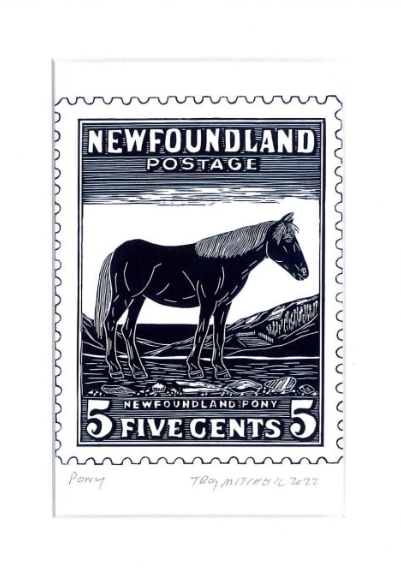
Newfoundland Ponies
Our province's heritage breed are known as hardy workers, used to plough fields and haul logs. But the Newfoundland pony featured in the video below, owned by passionate pony promoter Liz Chafe of Cappahayden, Newfoundland, is blessed with a rather unusual talent - we're fairly confident he'd make for stiff competition on any soccer field.
Actors & Re-enactors
The folks acting at L’Anse aux Meadows National Historic Site have to reach far back in time to get into their characters. In reconstructed sod huts Viking re-enactors mimic the Norse ways of life that played out here more than 1,000 years ago.
Lighthouses
Watch this video and come along for a tour of the Point Amour Lighthouse, the second tallest lighthouse in Canada, located at L'Anse Amour, Labrador.
Traditional Boats
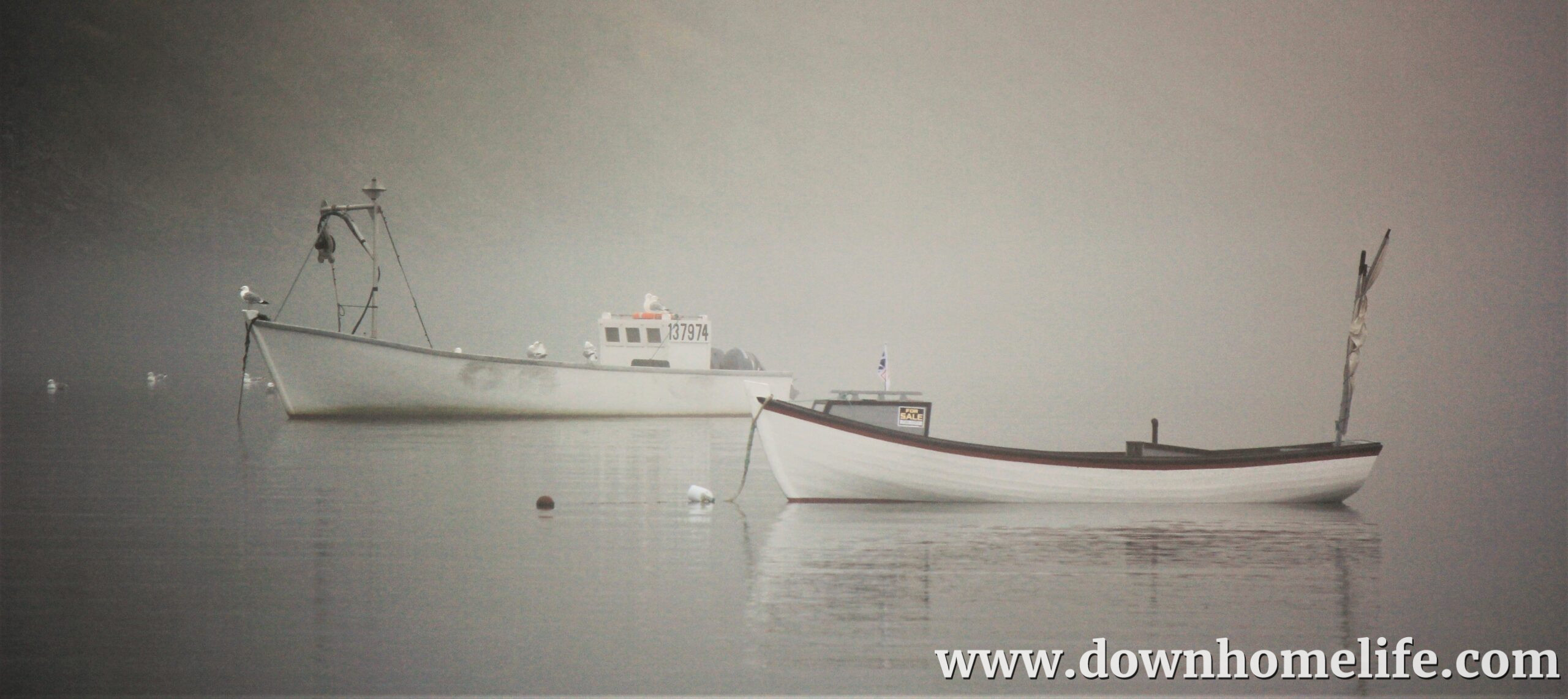
Placentia-native and master boat builder Jerome Canning details the province's historic boat building tradition in the following video. With the help of the Wooden Boat Museum in Winterton, Newfoundland, locals with knowledge of the now rare art form are passing the tradition to younger generations.
Aboriginal Culture
Parks Canada cameras follow along as Inuit descendants visit the homeland of their ancestors, known now as the Torngat Mountains National Park.
Big Views
Watching waterfalls cascade down over high cliffs surrounding this 16-km glacier-carved, land-locked fiord in Gros Morne National Park, you'll think you've been transported to another time.
Seabirds
The puffins of Elliston usually prefer to stick to a small island a short distance from the headland - but this one decided to wander over for some close-up camera shots!
From our vantage point, Newfoundland looks very small. The Gaff Topsails, hundreds of square kilometres of stunning west coast land covered in snowdrifts so immense they resemble dunes, is just a small white smudge on the province’s grey-green face – like a spoonful of sugar dumped on a slab of speckled granite. Newfoundland’s innumerable ponds are, from here, no more than a collection of icy spots connected by threads of river winding chaotically around hills and plateaus and other formations too tiny to make out. In the distance, a thin strip of land extends like a finger: the entire length of the Burin Peninsula jutting into the sea, everything slightly pinkish from the sunrise. The sun too is visible, and the Avalon Peninsula, and even the curve of the earth. And there in the corner, the black nothingness of space. From this perspective, everything looks small.
John Hennessey, Amarnath Mukhopadhyay and I are 125,000 feet up, in the lower quarter of the stratosphere, nearly 40 kilometres above southwest Newfoundland. But we’re also in a quiet study room at the Queen Elizabeth II Library at Memorial University. We’re looking at a picture John and Amarnath took on February 16, 2013.
How did two university students take a picture from 125,000 feet in the air? The answer seems deceptively simple: they tied a camera to a weather balloon and sent it into the sky. But the real story is much more complex. It begins last year in a medical science lab.
“John came to me one day, we were working in the lab,” Amarnath says. “He had seen this video online of a couple of teenagers from Ontario who had done a similar thing, sent a Lego man into space. He mentioned there was no one in Newfoundland who had done this before. The reason was that the weather is so rough here and the chance of the equipment falling into a river or the ocean is really, really high. We thought it was a cool idea and decided to give it a shot.”
Amarnath Mukhopadhyay and John Hennessey with some of the equipment used during their space flight.
Behind the scenes
Together they researched exactly how things would work, meticulously planning every step: how they’d get the camera up into the air, what type of balloon they’d use, what to fill the balloon with, how to take the pictures and, perhaps most importantly, how to get the camera back. John purchased the camera, a GoPro Hero 2 (a very hi-tech, very small camera normally used for mounting on helmets and other objects in extreme environments, which can record high-quality video and take still photos), the balloon (a 1,500-gram Totex weather balloon that can carry 200 cubic feet of gas) and a GPS system that would allow them to track the balloon’s progress and locate the landing site. They also used special high-altitude ballooning software called “habhub” to plot the course the balloon would take.
Then, after six weeks or so of number crunching and material tests, they were ready. Their first launch took place in Pasadena.
Watch the first launch, from Pasadena, N.L. and footage taken during the flight
“We went out on September 29 and launched the balloon for the first time. It went relatively smoothly,” Amarnath says.
The balloon went up, the camera recorded the stunning footage and returned safely to earth, in Millertown Junction. Success. John and Amarnath uploaded the footage to YouTube and immediately began work on the second launch. But this one would be different. “We got such good feedback from doing it the first time that we decided to do it again in the winter and get a nice view of a snow-covered Newfoundland,” Amarnath says. John adds, “We wanted to be able to show people the juxtaposition of Newfoundland when it’s frozen and when it’s not frozen. Because Newfoundland is 70 per cent covered by fresh water, in the wintertime it really does become a frozen land.”
So, on the morning of February 16, John and Amarnath woke at five o’clock at the Corner Brook Comfort Inn and began preparing. “We thought about stepping right outside the hotel and launching it,” John says, “but we entered the data into the software and it said the payload would land right at the mouth of the Exploits Bay, which would have been dangerous because the bay is saltwater and would not have been frozen.”
Through a process of trial and error, John and Amarnath eliminated various launch spots, plugging data into the software and watching the course the balloon (pictured left) would take appear on the screen as a long green line cutting across much of central Newfoundland. Finally, they settled on Gallants, a small settlement roughly halfway between Corner Brook and Stephenville, as the crow flies.
John and Amarnath were excited as they went through their procedure – checking the gear, filling the balloon, securing everything. When they were ready, they counted down from 10 and let go. The balloon soared, swaying a fair bit at first, but eventually straightened out, and, for two hours 20 minutes, drifted along in the freezing, silent air, nearly 40 kilometres above central Newfoundland until it popped from the cold and the payload attached to a parachute coasted to the ground.
For the second time, the launch was a success. They used the GPS system to zero in on the payload, and eventually found it 182 kilometres northeast of the launch site, perched a few feet beyond the north bank of the Exploits River (pictured left). They say they were lucky; had the launch taken place in the summer or fall, the payload would have fallen directly into the river and been swept down into the falls.
Watch the February launch, from Gallants, N.L. and footage taken during the flight
Along for the ride
Two successful launches under their belt, the honour of being the first Newfoundlanders to send something into space, all that breathtaking footage, and the two still aren’t done. In fact, they’re ramping up. “We want to go higher and higher,” John says, “not only for ourselves, but also to educate the people of Newfoundland and Labrador, to entertain people with beautiful images of our province.”
Amarnath elaborates, “What we’re planning to do for the next project is aim for approximately 150,000 feet, whereas the last two balloons reached between 120,000 and 125,000 feet.” Doing that, however, requires more resources. They’re planning on using a balloon twice as big as the ones they’ve been using, one that can hold two tanks of hydrogen gas. They’ve purchased a camera that can deliver better footage. And they have a new idea: sponsorship.
“We’re asking companies if they’re interested in donating money. If they have a logo or something we can take up into the stratosphere over Newfoundland and Labrador, we’d be more than obliged to do it,” John says, noting interested companies can reach them through their YouTube channel (search “Newfoundland Weather Balloon” on YouTube or Google).
Already Downhome has signed on. Says company president Grant Young, “Our readers have taken Downhome magazine with them everywhere – tops of mountains, across deserts, under water. This is our 25th year as a magazine. What better way to celebrate than by attempting to reach for the stars?”
Downhome magazine in hand, John and Amarnath are preparing for the next launch, their biggest ever, scheduled to take place May 18, 2013.
For them, the sky is the limit. – Story by Grant Loveys
Although they are defined differently, the terms “genealogy” and “family history” are often interchanged. Genealogy refers to tracing family lineages for a family tree. Family history, on the other hand, is much broader and includes biography information, pictures, letters and other documents associated with a person or family. Both are very demanding tasks, often requiring extensive research. Like most tasks, they begin with a desire and a plan and then a knowledge of the resources available to complete the job.
Below are some helpful tips to get you started, followed by websites that offer assistance.
Getting Started
1. Start with yourself, and work backwards though your immediate family and then through relatives on both sides of your family.
2. Write down their full names, dates of birth and for those that have passed away, the dates of their death.
3. Check public records for birth and baptismal certificates. For family history information, check recordings, newspaper clippings and school records.
4. Record and develop your family tree and family history using computer software or a free or pay-for-service website. Some sites offer a free trial period to determine if the product is best suited to your needs.
In the Bay of Islands, a traveller can find a bounty of adventure - from boating and fishing, to rock climbing and spelunking. The city of Corner Brook has all the urban delights, while the surrounding area is blessed with natural charm and beauty. A great way to view the Bay of Islands is on foot and there are enough hiking trails on both sides of the bay to ensure you get the complete picture.
Brake's Cove Hike Cox's Cove
This beautiful hike starts in the west end of Cox's Cove, with steep steps that lead to the shore and eventually on to the abandoned community of Brake's Cove. (It's best to take this hike at low tide to enjoy the seaside stroll; otherwise you'll have to amble along the hills.) In Brake's Cove, see the remnants of what was once a bustling community, including the foundations of herring stores where the inhabitants once cleaned their catches; the indentations left in the ground by old potato fields; as well as a cemetery where residents of the former community are buried. Take along your camera for an awe-inspiring snapshot of the Gulf of St. Lawrence. Experienced hikers will enjoy continuing their journey past Brake's Cove. Walk another kilometre to Sammy's Beach, where archaeologists have uncovered evidence of Dorset Palaeoeskimo history. Back in Cox's Cove, take a break and have a snack at the picnic area. Hop aboard a tour with True North Charters, starting at the public dock in Cox's Cove. The friendly hosts will tell tales of the resettlement era, while passing along by the abandoned communities of Brake's Cove, Penguin Arm, Goose Arm, Manuels and Wells'.
Govemor's Staircase Blow Me Down Provincial Park
This is a hike the whole family can do spur of the moment. It doesn't take a lot of time and it has plenty of rewards. Beginning in the provincial park, located on a peninsula between Lark Harbour and York Harbour, set out on the half-kilometre trail to the lookout. It is easy to navigate the boardwalk, and the stone steps are a curiosity you have to see for yourself. Called Govemor's Staircase, the steps are naturally shaped - not manmade - from 450-million-year-old volcanic rock striped with veins of white quartz. In just a half-hour, you'll arrive at the lookout to take in an awesome view of the Bay of Islands, the limestone cliffs of Murry Mountain, Tortoise Mountain and the highest, Blow Me Down Mountain at 650 metres above sea level.
Corner Brook Stream Trail Corner Brook
A system of constructed, groomed trails in this west coast city affords the opportunity to tour its urban and natural areas with several jumping on and off spots. Amble through the downtown core - the art galleries, museums, restaurants and historic Broadway shopping district - with entry and exit points at the Glynmill Inn, Margaret Bowater Park, Sir Richard Squires Building and City Hall. Or from Crocker's Road at the TCH overpass, pick up the trail above Margaret Bowater Park and see for yourself its spectacular view over the city. There are several rest stops on the Corner Brook Stream Trail for quiet moments of reflection.
Hughes Brook Trail Irishtown
Nature is at your footsteps on this 3-km trail, rated easy. It is maintained by the Aquatic Centre for Research and Education. The trail begins just outside Irishtown at Huges Brook Bridge and follows the length of the river to where it empties into an estuary. Observant hikers could see a wide variety of animal and plant life, such as muskrats, moose, beavers, blue jays, woodpeckers and waterfowl. ACRE has also installed nesting boxes in the trail area for birds and bats, and there is a viewing platform overlooking the estuary, as well as Corner Brook and Bay of Islands. In addition, geocachers with their GPS will find a cache hidden somewhere on this trail.
BUZZZZZ!!! You can’t believe it. You finally drifted off what felt like minutes ago, and now it’s time to face the day. Your brain is still foggy from the sleeping pill you took the night before. You wish you could rest without drugs, but you’ve been taking them so long you don’t think you’ll ever sleep without them.
Sound familiar? One in three people experience sleeplessness and one in 10 suffer from chronic insomnia. Pharmacists in Canada fill as many as 5.6 million prescriptions for sleeping pills annually. “The Walking Dead” isn’t just a popular TV show about zombies – it’s almost a global reality, with so many of us walking around in a drug-induced stupor. And by taking these dangerous hypnotics, we may be steering ourselves toward premature death.
These medications impair memory, balance and coordination. According to a recent study by the British Medical Journal (BMJ), patients regularly using prescription sleep drugs were nearly five times as likely as non-users to die over a period of two-and-a-half years. Even if you consume less than 20 pills annually, you are still at increased risk of shortened life expectancy. Heavy users are even at higher risk of developing cancer. Based on these findings, sleeping pills are sounding as dangerous as smoking cigarettes.
The problems with pills
While the scientific community considers this preliminary research, many doctors are choosing to examine insomnia’s underlying triggers – stress, diet, caffeine/alcohol consumption or lack of exercise – before prescribing medication for this invisible condition. Dr. Craig Hudson, a Toronto-based psychiatrist, is one of many who recommend natural health solutions for treating sleep issues.
“The BMJ study was a sea of change in the way most people think about sleep medication,” says Dr. Hudson. “Historically, the problems with drugs like lorazepam and ativan include tolerance: needing more of the same medication to have the same effect over time. Also dependence – if you stop you can have a rebound of insomnia all the way around.”
Sleep, a natural, necessary human function, becomes unnatural and stressful when you’re dependent on drugs to get rest, Hudson explains. He also cites the disturbance of “sleep architecture” (the five stages of sleep) as being a side effect of these medications.
Insomnia is a complex, subjective condition. It’s one of the few disorders where the diagnosis lies with the patient more than the physician. While it’s advantageous to uncover the underlying causes for insomnia, it can be quite difficult for a physician to address specific causes in the average short clinic visit.
The remedy is often to give them a short-term prescription for medication, as it helps them get the rest they need. But as the new BMJ study reveals, even short-term usage of hypnotics can be dangerous.
Improving “sleep hygiene”
Even before the BMJ release, Hudson’s preferred treatment was not a chemical approach. He created the One Week to Better Sleep Program; a quick resource guide assisting in working toward naturally improved and sustained sleep patterns. It involves behavioural, environmental, and diet changes – a BED checklist, “a measure of your ability to construct your wake time in such a way that healthy sleep is available when you need it,” he explains.
The BED checklist includes maintaining a regular sleep-wake time, avoiding naps, removing distractions like television or computers from the bedroom, not using alcohol as a sleep aid, and watching your caffeine intake (including hidden sources like clear sodas or mocha ice cream).
An important part of the program is calculating “sleep efficiency,” or how well you are sleeping within a reasonable amount of time. “Sleep efficiency is the total time (in minutes) asleep divided by the total time (in minutes) in bed, multiplied by 100 to give you a percentage,” Hudson says, adding that a rating of at least 70 per cent is a good step towards improving sleep.
Akin to a new workout regime, such a method isn’t an overnight fix; but applied long-term, these natural changes can improve your “sleep hygiene” much better than any drug. According to the National Sleep Foundation, “Sleep hygiene is a variety of different practices that are necessary to have normal, quality nighttime sleep and full daytime alertness.”
Hudson says the success rate of his approach is pretty good. He consulted several sleep psychologists throughout North America, developing a cognitive behavioural approach that he claims will benefit the vast majority (about 70 per cent) of insomniacs. “It works, but you have to commit to it. The success is not overnight, it’s often 20-30 per cent a week, but if you do that over several months you’ll notice the change.”
Some natural solutions widely recommended for a more restful night include yoga, meditation and acupuncture. Melatonin – a naturally occurring compound that helps regulate other hormones and maintains the body’s circadian rhythm – is available in over-the-counter supplements. It comes from the same amino acid that exists in milk, turkey and pumpkin seeds.
Hudson says that while melatonin supplements can help overcome something like jetlag, taking it consistently over time may cause some concern because “you’re basically suppressing the endogenous ability of the brain to produce melatonin. If you’re taking it every day, your brain isn’t going to make it as much,” he says.
Diet plays an unexpected but central role in how you sleep. Proteins that are high in tryptophan (an amino acid that contributes to natural melatonin production) such as nuts, red meat, eggs and legumes are best consumed no later than three hours before bed, so that the available tryptophan in your system isn’t overpowered.
You should also increase your intake of carbohydrates before bed as the uptake of this essential amino acid is “greatly enhanced by the presence of certain carbs.” Bread, crackers, and biscuits “naturally act to shunt the tryptophan you took in earlier in the day to the right place in your brain responsible for turning it into natural melatonin.”
Hudson’s sleep plan has daily menu suggestions, based around “the ideal nutritional balance that was often achieved in days of old when people ate larger meals earlier in the day and lighter ‘teas’ at day’s end. These dietary changes right that balance again,” says Hudson, perhaps giving credence to the Newfoundland tradition of a toast “lunch” before bed.
Combining these dietary actions with a psychological approach creates two pillars of sleep hygiene. Says Hudson, “You have to be disciplined about it and focused on good health.”
Hudson says building confidence in getting sleep without the pills is crucial. He recognizes how these drugs help alleviate the anxiety insomniacs feel about falling asleep, but they only work for the short-term. After awhile, many insomniacs just give up on a good night’s sleep due to increasing demands of a compressed modern society featuring more entertainment options distracting us from rest.
“You can get on the computer, watch television, and listen to the radio. Forty years ago you couldn’t watch a whole lot of television late at night,” Hudson points out.
According to the National Sleep Foundation, problems with insomnia are increasing alongside the rising prevalence of “screens” in our lives – TVs, laptops, smart phones, and e-readers/tablets, whose rapid information access often make our brains alert and distracted when they’re supposed to be slowing down.
Our instant-gratification society also works against doctors’ efforts to apply natural solutions to insomnia. “People want quick responses to everything; it’s the same as wanting sleeping pills at the doctor as a quick solution. If you say to them, ‘We have to work on this slowly over months,’ that’s not very compelling. People are frustrated in our Blackberry society, by the lack of a sophisticated solution to a complicated problem,” Hudson says.
“Unfortunately, as you can see from the BMJ study, despite really good efforts and science, modern medicine does not have a good solution to chronic insomnia.”
The importance of making healthy and natural lifestyle changes in order to overcome insomnia and wean off prescription medication is more relevant now than ever due to increased health concerns and risks surrounding sleeping pills.
For those working towards a healthier lifestyle, Hudson offers encouragement. “As long as you’re not doing anything destructive, I think you’re further ahead. Any kind of behavioural component change that helps you relax and be calm is good.”
Interested in trying Dr. Hudson’s One Week to Better Sleep Program? You can view it for free on his website.
Congratulations to the winners of our 2010 Juno Jukebox giveaway!
Five lucky people are getting a five-pack of CDs by this year’s Juno nominees and winners: Blue Rodeo, Michael Buble, Billy Talent, Amelia Curran, and Tegan and Sara.
And the winners are:
Deb Callaghan
Al O’Brien
Tina Power
Janette Lambert
Eva Clarkson
Special thanks to our friends at Warner Music Canada for supplying the prizes.